It happens in a split second. A back gate is left unlatched by a delivery driver. A leash handle suddenly slips from a wet hand during a morning walk. A sudden loud noise, like thunder or unexpected fireworks, sends panic through your dog, triggering an instinct to run. By the time you realize what has occurred, your dog is no longer beside you.
In that heart-stopping moment, panic sets in, followed quickly by a rush to understand what tools you have available to bring your companion back safely. It is often during these frantic hours that pet owners discover a critical truth: microchips, traditional engraved tags, NFC or QR smart tags, dedicated GPS trackers, and Apple AirTags do vastly different things.
When searching for answers, many owners ask a straightforward question: Which option is the best?
However, that might be the wrong question entirely. These technologies are not mutually exclusive alternatives, nor do they perform the same function. Instead, they solve distinct problems and come into play at entirely different stages of getting a lost dog safely home. Understanding how these tools work, where they excel, and where their limitations lie is the key to creating a comprehensive safety net for your pet.
Executive Summary: Quick Reference Guide
If you need immediate clarity on how these safety devices compare, here is a quick overview of how each technology functions and where it provides the most value:
In Short: There is no single “best” device for every lost-dog situation because each option solves a different problem.
Microchip: permanent identification that stays with your dog, but requires a compatible scanner.
Traditional ID Tag: immediate, simple contact information, but limited and static.
QR / NFC Smart Tag: immediate access to an updateable digital pet profile when someone finds your dog.
GPS Tracker: active location tracking, but requires power and usually an ongoing subscription.
AirTag: an additional Find My-based location layer that depends on nearby compatible Apple devices.
The better question is not “Which one wins?” but “Which failure does each layer protect against?”
Article Navigation
- Microchips: Permanent Identification, Not GPS Tracking
- Can You Scan a Dog’s Microchip with a Smartphone?
- Traditional ID Tags: The Power of Low-Tech Simplicity
- QR and NFC Smart Tags: Bridging the Physical and Digital Worlds
- Dedicated GPS Trackers: Active Location Searching
- Apple AirTags: The Bluetooth Crowdsourced Alternative
- Real-World Scenarios: How Each Tool Performs Under Pressure
- The Layered Safety Strategy: How to Combine Tools for Maximum Protection
- Frequently Asked Questions (FAQ)
Rather than asking whether you should choose a microchip OR an ID tag OR a GPS tracker, a more effective question is: What specific loss scenario are you trying to prepare for?
Microchips: Permanent Identification, Not GPS Tracking
One of the most persistent and widespread misconceptions in pet care is the belief that an implanted microchip allows an owner to track a missing dog's location on a map.
They do not.
A pet microchip is a tiny, passive radio-frequency identification (RFID) transponder, roughly the size of a grain of rice, implanted beneath the dog's skin between the shoulder blades. Because it is a passive device, it carries no internal battery, contains no GPS receiver, and does not continuously transmit a signal. It cannot broadcast a location across town or communicate with an app on your smartphone.
Instead, the true value of a microchip lies in its permanence. Unlike collars, harnesses, or attached tags, a microchip cannot fall off, break, or be intentionally removed without surgical intervention. It remains with the animal for its entire life.
When a lost dog is picked up by animal control, brought to a rescue shelter, or taken to a veterinary clinic, staff will run a specialized handheld scanner over the dog's shoulders. The scanner emits a low radio frequency that energizes the passive microchip just long enough for it to transmit its unique 15-digit identification code. Staff then enter this number into a secure national or international pet database to retrieve the owner's contact details.
Can You Scan a Dog's Microchip with a Smartphone?
A common point of confusion arises around smartphone capabilities. Standard smartphones cannot read an implanted pet microchip. While modern phones feature Near Field Communication (NFC) hardware, this technology operates on different frequencies and protocols than the specialized RFID chips implanted in animals.
This technical distinction creates a significant practical gap when a dog strays. Imagine a neighbor three streets away finds your wandering dog. The dog is friendly, approaches them safely, and the neighbor wants to help reunite you immediately. If your dog relies solely on an implanted microchip, that helpful neighbor standing on the sidewalk cannot simply tap their phone against the dog to get your phone number.
To read that microchip, the finder must transport the dog to a local vet or shelter during operating hours. While the microchip remains an indispensable foundation of pet identification, it does not offer a direct or immediate communication channel between a helpful bystander and you.
The Critical Role of Database Maintenance
A microchip is only as reliable as the contact information linked to its unique registration code. Phone numbers change, families move to new addresses, and ownership sometimes transfers. While the physical microchip remains unchanged inside the animal, the entry in the registry can easily become outdated.
If a shelter scans a microchip and finds a phone number that has been disconnected for three years, the chain of identification breaks down. Responsible pet management requires checking your pet’s microchip registry annually—or whenever you relocate or change phone numbers—to ensure that your current primary and secondary phone numbers are accurately listed.
Traditional ID Tags: The Power of Low-Tech Simplicity
In an era dominated by smart devices, digital apps, and connected ecosystems, it is easy to overlook the modest engraved metal or plastic tag hanging from a collar. Yet, the traditional ID tag possesses one paramount advantage that high-tech solutions cannot replicate: zero technical friction.
When someone encounters a stray dog wearing a legible engraved tag, the recovery process is instantaneous:
- The finder looks at the tag.
- They read the phone number.
- They dial the phone number on their personal phone.
There is no requirement for a specialized RFID scanner, no need to download a specific app, no dependency on cellular signals, no battery level to worry about, and no account setup required. For immediate, local reunions, a clearly engraved phone number remains one of the fastest ways to get a dog back home.
-
Pet Pass ID - 2in1 FRIENDS PACK
Original price was: € 40.00.€ 30.00Current price is: € 30.00. -
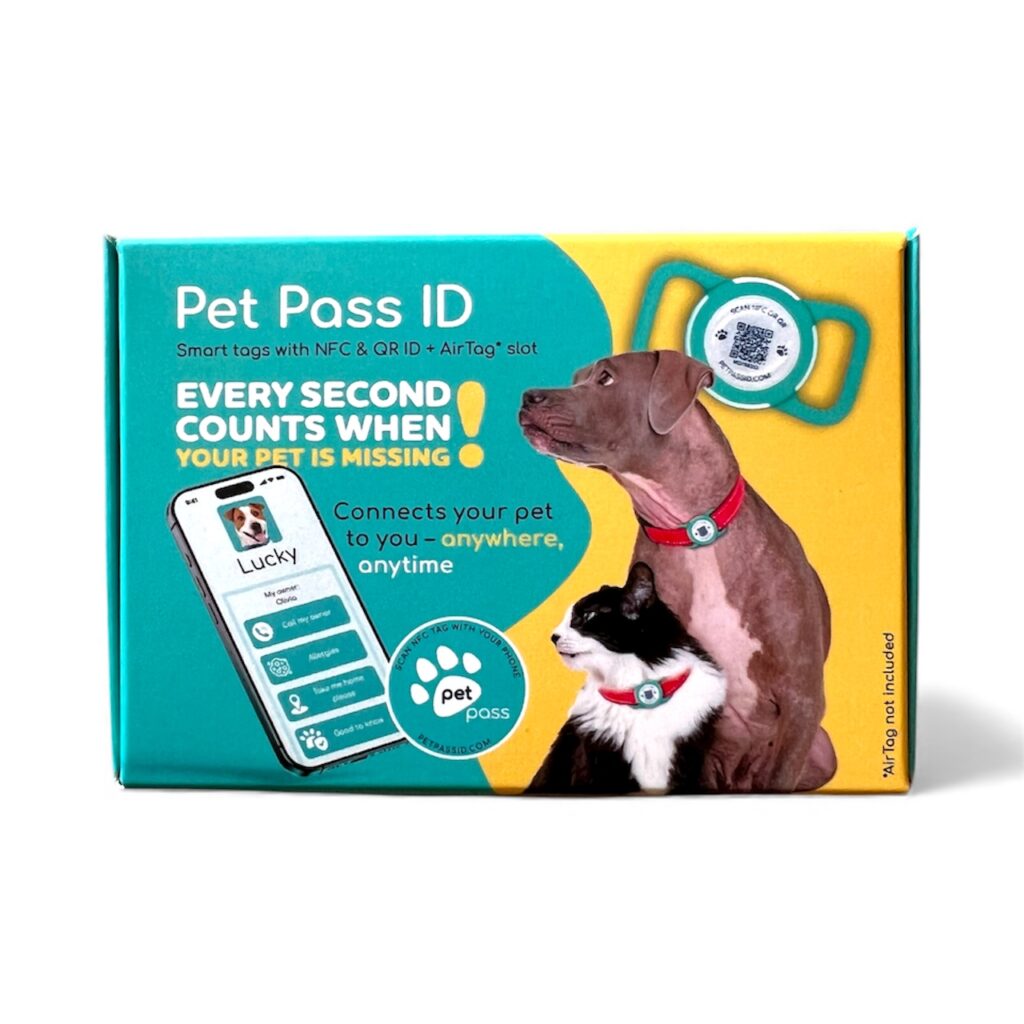
Pet Pass ID - Smart Tag with AirTag Slot
€ 30.00 -
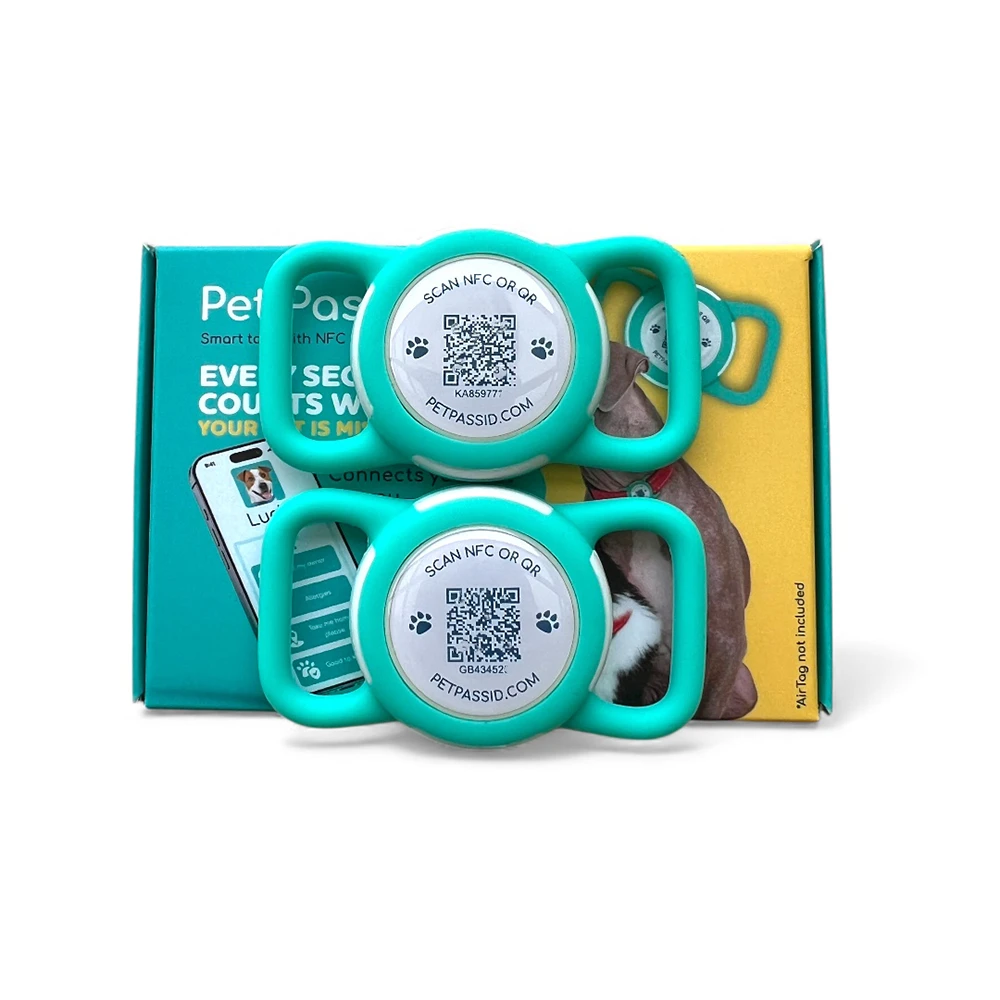
Pet Pass ID - Smart Tag with AirTag Slot 2in1 FRIENDS PACK
Original price was: € 60.00.€ 40.00Current price is: € 40.00.

Where Traditional Tags Fall Short
Despite their simplicity, traditional tags carry inherent physical limitations. The surface area of a small metallic disc can only accommodate a few lines of small text—typically a pet's name and one or two phone numbers.
If you relocate, travel temporarily, or change your phone number, the physical tag becomes instantly obsolete, requiring you to purchase and wait for a new engraved replacement. Furthermore, traditional tags offer no space to communicate crucial context. If your dog is anxious around strangers, suffers from severe medical conditions such as diabetes or epilepsy, requires immediate daily medication, or has severe dietary allergies, a standard engraved tag simply cannot convey these critical life-saving details to the person holding your pet.
QR and NFC Smart Tags: Bridging the Physical and Digital Worlds
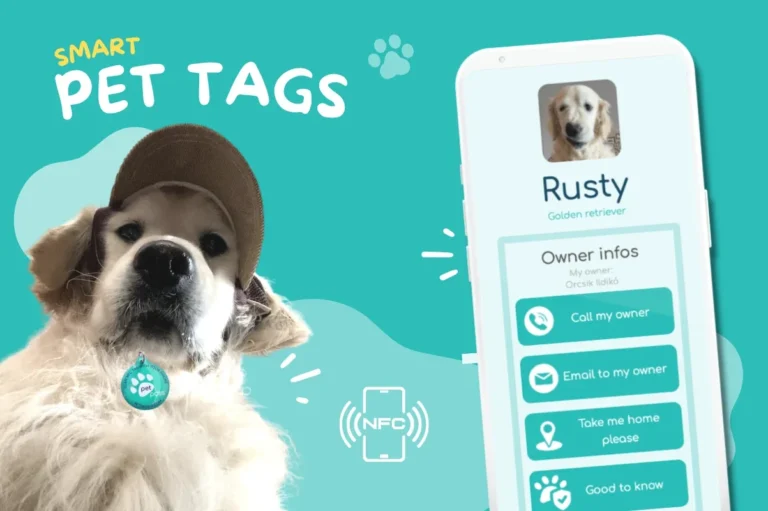
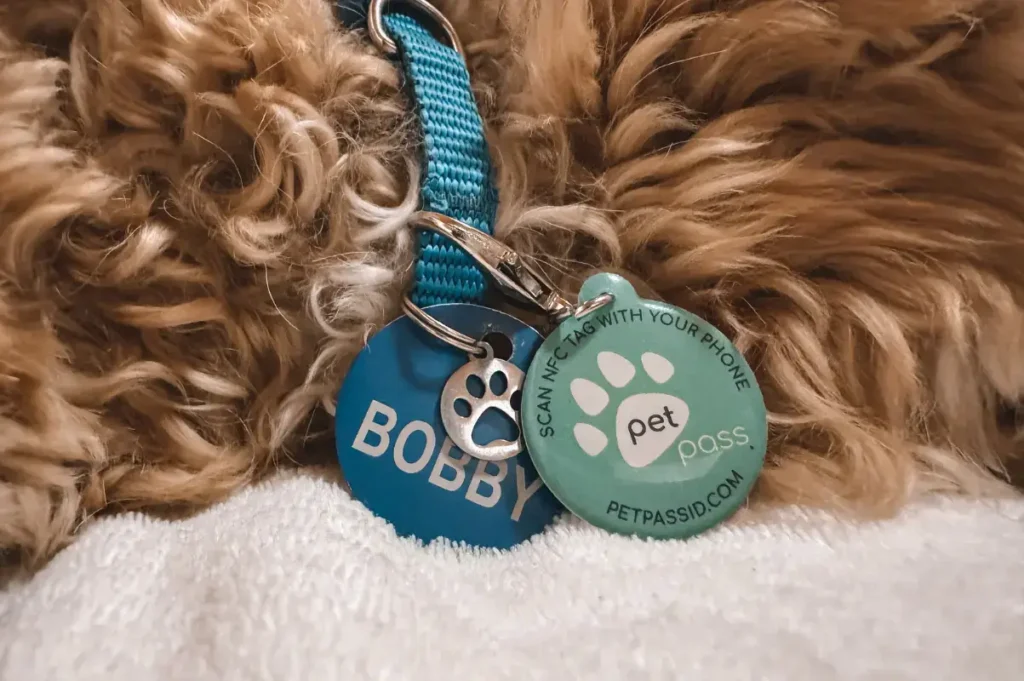
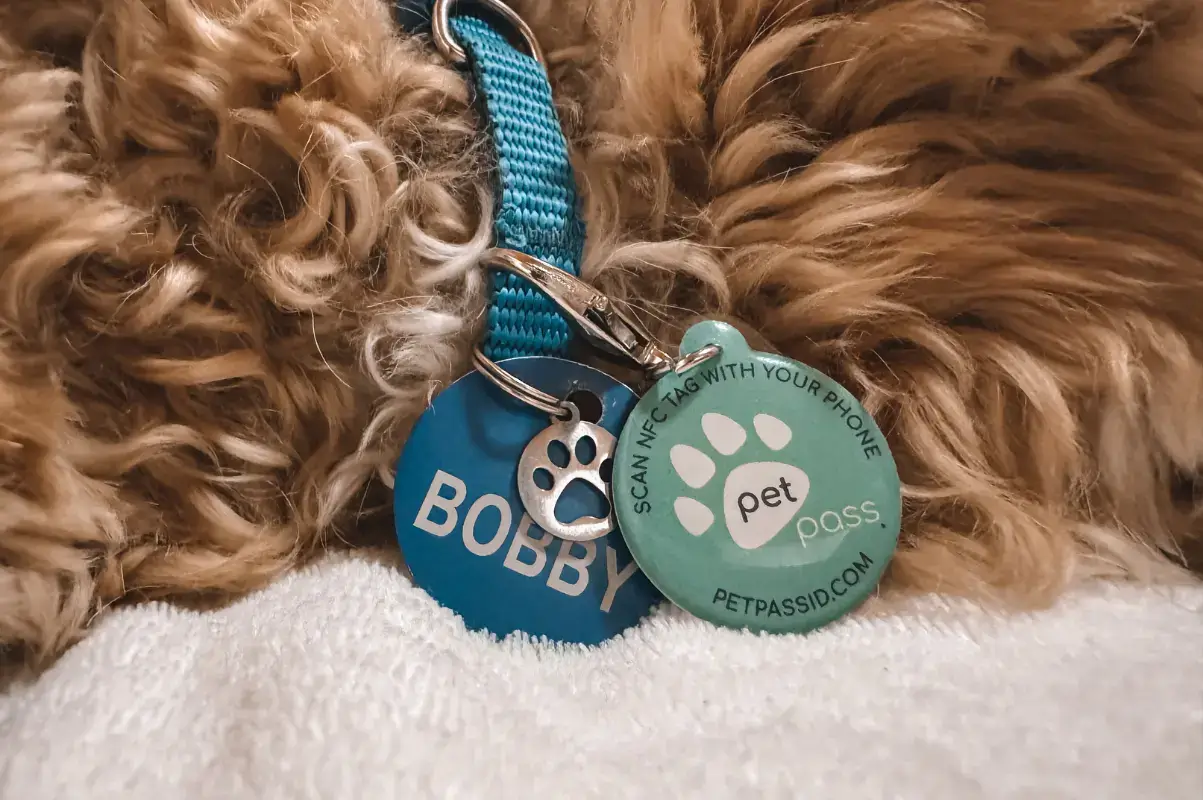
Smart tags represent the modern evolution of the classic collar tag. Rather than printing every piece of information directly onto the metal surface, a smart tag—such as Pet Pass ID—acts as a physical portal to a dynamic, hosted online pet profile.
These tags incorporate two primary touchpoints: a printed QR code that can be scanned using any standard smartphone camera, and an embedded NFC microchip that allows smartphone users to simply tap their device against the tag.
How a Smart Tag System Works in Practice
When a helpful finder encounters a pet wearing a smart tag, they do not need to download a specialized app. By tapping their phone against the tag or pointing their camera at the QR code, a web page opens automatically, displaying the dog’s digital safety profile.
Depending on what the owner chooses to display, this digital profile can include:
- Multiple primary and backup emergency contact numbers.
- Clear instructions on whether the dog is timid, friendly, or prone to running.
- Detailed medical histories, daily medication schedules, and veterinary contact details.
- Dietary restrictions and severe allergy warnings.
- A clear, recent photograph confirming the pet's identity.

How strong is your pet’s safety setup?
Free 60-second safety check.
Pet Safety Check
✓ Takes about 60 seconds
✓ Personalized to your pet
✓ Get your Pet Safety Score
Free. No purchase required.
Dynamic Flexibility and Immediate Accessibility
The primary distinction between a traditional tag and a smart tag is the ability to manage information dynamically. If you go on vacation, change your cell provider, or temporarily place your dog with a petsitter, you can log into your account and update your contact details instantly. The physical tag on the collar remains the same, but the information accessible to a finder is immediately updated in real time.
Furthermore, smart tags bridge the immediate communication gap that microchips leave open. They allow any ordinary citizen with a modern smartphone to access direct contact information right on the spot, eliminating the requirement to transport the dog to a veterinary clinic just to read a number.
Understanding the Boundaries of Smart Tags
While smart tags streamline the connection between a finder and an owner, they share a fundamental constraint with all collar-bound accessories: if the dog slips its collar or harness, the smart tag stays behind on the ground. For this reason, smart tags are designed to complement—never replace—an implanted microchip.
Dedicated GPS Trackers: Active Location Searching
All the solutions discussed so far share a common prerequisite: they rely on someone else finding your dog first and taking action to inspect a tag or scan a chip.
A dedicated GPS pet tracker addresses a completely different scenario: What if your dog is actively moving, frightened, or lost in an area where no one is around to find them?
A dedicated GPS tracker is an electronic device attached to the dog's collar that utilizes global navigation satellite networks (such as GPS, GLONASS, or Galileo) to calculate its exact geographic coordinates. The tracker then uses an internal cellular module to transmit those coordinates over cellular networks directly to an application on your smartphone.
This fundamentally reverses the dynamic of a lost pet search:
- ID Tags & Smart Tags: Finder $\rightarrow$ Contacts $\rightarrow$ Owner
- GPS Trackers: Owner $\rightarrow$ Tracks Location $\rightarrow$ Finds Lost Dog
For dogs with a high prey drive, dogs living on large open acreage, hunting companions, or pets that tend to bolt during thunderstorms, active GPS tracking provides real-time visibility into where the animal is heading.
The Trade-offs: Battery Management and Ongoing Costs
Because active GPS positioning, satellite communication, and cellular data transmission require continuous power, dedicated pet trackers must carry onboard rechargeable batteries. Depending on the tracking frequency, device size, and cellular coverage strength, these batteries generally require recharging every few days or weeks.
Additionally, because these devices transmit location data across cellular networks, they almost always require an active monthly or annual data subscription plan. Owners considering a GPS tracker must weigh whether the continuous reassurance of active live tracking balances the routine of regular charging and ongoing service fees.
Apple AirTags: The Bluetooth Crowdsourced Alternative
In recent years, many pet owners have turned to Apple AirTags as a lightweight, low-cost way to keep track of their pets. However, confusion remains widespread regarding how an AirTag actually functions compared to a true GPS tracker.
An AirTag is not a GPS tracker. It contains no satellite navigation hardware and no direct cellular radio. It does not independently communicate its position to the internet.
How the Find My Network Operates
Instead of satellite tracking, an AirTag relies on short-range Bluetooth signals and Apple’s vast "Find My" network. The AirTag continuously broadcasts a secure Bluetooth signal. When any compatible Apple device (such as an iPhone, iPad, or Mac) passes within Bluetooth range—typically within 30 to 100 feet depending on environment and obstacles—it anonymously detects the AirTag's signal.
That nearby Apple device then uses its own cellular or Wi-Fi connection and location services to relay the approximate location of the AirTag back to Apple’s cloud servers, where the owner can view it on a map.
The Strengths of an AirTag
The widespread adoption of AirTags among pet owners is easy to understand:
- Affordability: They carry a low, one-time purchase price with no monthly subscription fees.
- Battery Life: They run on a standard user-replaceable coin cell battery that typically lasts up to a year.
- Compact Size: They are small and easily secured to most standard dog collars.
- Urban Network Density: In densely populated towns, suburban neighborhoods, or urban parks with high foot traffic, the sheer density of active iPhones creates an effective, highly responsive crowdsourced tracking network.
Critical Limitations for Pet Safety
Despite these advantages, Apple explicitly designs and markets the AirTag for tracking stationary personal belongings—such as keys, luggage, or backpacks—rather than living animals or people.
The limitations become starkly apparent in specific environments:
- Rural or Wilderness Settings: If a dog chases wildlife into a dense forest, rural farmland, or remote hiking trail where no human with an active iPhone is nearby, the AirTag has no way to relay its position. The map will simply show the "Last Known Location" from the last time it passed an Apple device.
- Delayed Location Updates: Unlike dedicated GPS trackers that push continuous real-time updates every few seconds while moving, AirTag updates depend entirely on the opportunistic presence of passing devices. A fast-moving dog can easily travel several blocks away from the spot where its signal was last picked up.
Viewing an AirTag as a supplemental location aid rather than a replacement for dedicated GPS ensures that owners hold realistic expectations during an emergency.
Real-World Scenarios: How Each Tool Performs Under Pressure
To better appreciate how these distinct technologies function when it matters most, let us walk through five common lost-pet scenarios.
Scenario 1: A Neighbor Finds Your Dog Three Blocks Away
A neighbor spots your dog strolling down the sidewalk a few houses down. The dog is friendly and easily approached.
- Traditional ID Tag: The neighbor reads your phone number directly off the tag and calls you immediately. You walk down the block to collect your dog within ten minutes.
- Smart Tag: The neighbor taps their phone against the tag, views your emergency profile, sees that the dog needs medication, and calls your primary phone number or the listed backup contact.
- Microchip: Without a collar tag, the neighbor must secure the dog, load it into a vehicle, and drive to a local veterinary clinic to request a microchip scan.
- GPS Tracker / AirTag: You receive a notification on your phone showing your dog's position down the street, allowing you to walk directly toward them.
Scenario 2: Your Dog is Frightened and Actively Running
Scared by loud construction noise, your dog bolts into an unfamiliar neighborhood and keeps moving quickly away from home.
- ID Tags & Smart Tags: These remain passive until the dog slows down and allows someone to approach and read or scan the tag.
- Dedicated GPS Tracker: The app alerts you that your dog has left your designated "Safe Zone." You open the live tracking view, monitor their real-time movement across map streets, and head them off before they reach a busy highway.
- AirTag: If the dog moves through populated streets, passing iPhones continuously ping the AirTag, providing a trail of approximate location updates across your map.
Scenario 3: Your Dog Slips Out of Its Harness or Collar
While attempting to scramble under a chain-link fence, your dog's harness gets caught and slips off completely. The dog continues running without any attached gear.
- Traditional Tag, Smart Tag, GPS, AirTag: Because all four devices were attached to the lost harness, they are now sitting empty on the ground under the fence line.
- Microchip: The microchip remains safely in place under the dog's skin. When animal control eventually picks up the dog, the shelter scans the chip, retrieves your registered details, and calls you immediately.
Scenario 4: You Change Your Phone Number or Move Houses
You move across town to a new home address and switch to a new phone carrier, receiving a new mobile number.
- Traditional Tag: The old engraved tag is now inaccurate and must be removed, discarded, and replaced with a newly ordered tag.
- Smart Tag: You open your profile app on your phone, update your contact phone number and address, and save changes. The update is effective instantly on the existing tag.
- Microchip: You log into your national pet microchip registry account online and submit your updated address and telephone details to ensure the database record remains current.
Scenario 5: Your Dog Disappears During a Mountain Hike
While hiking along a remote forest trail, your dog catches the scent of wildlife and sprints into dense woods off the main trail.
- Dedicated GPS Tracker: Using direct satellite positioning, the tracker calculates coordinates and transmits them over available cellular networks, allowing you to trace the dog's path through the forest.
- AirTag: Because there are no other hikers or Apple devices nearby in the deep woods, the AirTag cannot broadcast location updates to the Find My network. The app displays only the location where the dog was last near your phone.
- Smart Tag / Traditional Tag: These become invaluable the moment your dog eventually wanders onto a public road or campground and encounters another hiker.

The Layered Safety Strategy: How to Combine Tools for Maximum Protection
When reviewing these options, it becomes clear that pet security should not be approached as a winner-take-all competition among technologies. No single device solves every potential crisis. True safety comes from building a complementary, layered security framework where each tool addresses a distinct vulnerability.
The 3-Layer safety matrix
When reviewing these options, it becomes clear that pet security should not be approached as a winner-take-all competition among technologies. No single device solves every potential crisis. True safety comes from building a complementary, layered security framework where each tool addresses a distinct vulnerability.
By organizing your preparation into three distinct operational layers, you ensure that your dog is covered regardless of how an emergency unfolds:
- Layer 1: Permanent Identification (Microchip)
- Microchip ──► Stays with pet even if collar is lost or removed.
- Purpose: Guarantees that your pet can always be identified if all external gear is lost, slipped, or damaged.
- Action: Ensure your dog is microchipped and verify that your registry records are kept up to date.
- Layer 2: Immediate Finder Communication (NFC/QR Smart Tag or Engraved Tag)
- Smart Tag / Traditional Tag ──► Allows anyone with a phone to connect.
- Purpose: Empowers any everyday citizen who encounters your pet to reach you immediately without needing special equipment.
- Action: Attach an easy-to-read tag, such as a Pet Pass ID smart tag, to your pet’s daily collar to provide access to comprehensive contact and medical information.
- Layer 3: Active Owner Location Tracking (GPS or AirTag)
- GPS Tracker / AirTag ──► Enables you to actively pinpoint location.
- Purpose: Gives you the tools to actively search for and locate your pet before someone else needs to capture them.
- Action: Equip a dedicated GPS tracker for high-risk activities (hiking, travel, escape-prone pets) or an AirTag for suburban peace of mind.
By combining these layers—a registered microchip under the skin, a dynamic smart tag on the collar, and location tracking where appropriate—you create an effective safety network. You do not prepare because you expect to lose your dog; you prepare so that if the unthinkable ever happens, the journey home is as short and safe as possible.
Frequently Asked Questions (FAQ)
Does a dog microchip contain a GPS tracker?
No. A pet microchip contains no GPS capabilities, no internal power source, and no capability to transmit live signals. It is a passive radio-frequency identification (RFID) device that stores a unique identification code. That code can only be read when a specialized handheld scanner is passed directly over the animal by a veterinarian or shelter worker.
Can I use my iPhone or Android phone to scan my dog's implanted microchip?
No. Standard smartphone hardware cannot scan implanted pet microchips. Although modern smartphones feature Near Field Communication (NFC), microchips operate on different RFID frequencies and protocols that require specialized veterinary scanning equipment.
If my dog is already microchipped, do they still need an external ID tag?
Yes. A microchip and an external ID tag perform different roles. While a microchip provides permanent backup identification, reading it requires transporting the dog to a clinic or shelter with a scanner. An external collar tag allows any neighbor or bystander who finds your dog to contact you immediately on the spot.
What is the advantage of an NFC or QR smart tag over a standard engraved metal tag?
While standard engraved tags are effective for displaying a single phone number, smart tags (like Pet Pass ID) connect directly to an online digital pet profile. This allows you to list multiple emergency contacts, medical details, behavioral notes, and vet information. Crucially, digital profiles can be updated online at any time without buying a new physical tag.
Does someone need a special app to scan a QR or NFC smart pet tag?
No. Modern smart tags are designed to work with standard smartphone features. A finder can simply scan the QR code using their built-in camera app or tap an NFC-enabled smartphone against the tag to view the pet's profile page in their web browser.
Is an Apple AirTag a true replacement for a dedicated pet GPS tracker?
No. An AirTag is not a dedicated pet GPS tracker. Dedicated GPS trackers use satellite positioning and cellular data to transmit real-time location updates directly to your phone wherever cellular coverage exists. AirTags rely entirely on Bluetooth pings relayed by nearby Apple devices within the crowdsourced Find My network, making them less reliable in rural or unpopulated areas.
Will an AirTag help me find my dog if my own phone is powered off or far away?
Yes. Your own phone does not need to be near the AirTag. As long as other active Apple devices (such as passing pedestrians' iPhones) come within Bluetooth range of the AirTag, they will securely and anonymously transmit its location to the cloud, allowing you to view its location on your Find My map.
What happens if my dog loses their collar while lost?
If your dog loses its collar, all collar-mounted accessories—including traditional tags, smart tags, GPS trackers, and AirTags—will be lost with it. This is why an implanted microchip is critical: it remains permanently with the animal under the skin, providing a reliable final safety layer to prove ownership and reunite you with your pet.
Keep your contact details close.
Discover smart NFC and QR pet tags that connect a finder to your pet’s digital profile.
Explore Pet Pass ID tags