
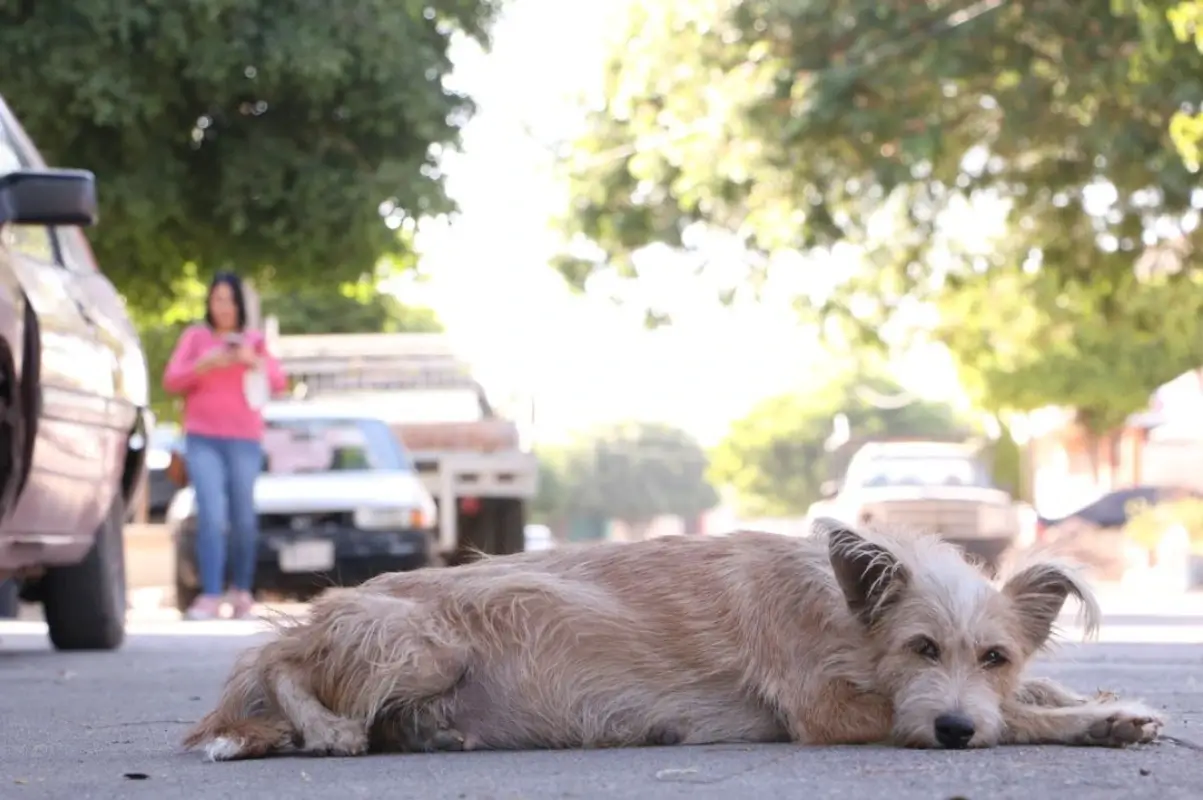
You're walking home, driving down a local street, or sitting on your porch when you notice a dog wandering alone. There's no owner in sight.
The dog might have a collar. They might even have a microchip hidden under their skin. But right now, standing on the sidewalk, you don't know their name, where they live, whether they are friendly, or whether it's safe to approach them.
So what do you actually do?
The good news is that you don't need to become a professional animal rescuer overnight. You don't need to solve everything in the first five minutes. Your first job is simply to keep yourself and the dog safe. Once the situation is stable, you can start working out how to get them home.
This step-by-step guide walks you through every stage of finding a lost dog—from safe handling and checking for hidden smart tags to verifying the owner and deciding what to do if no one steps forward.
Executive Summary: What Should You Do If You Find a Lost Dog?
In Short: If you find a dog wandering alone, your first priority is safety. Do not chase, corner, or suddenly grab a frightened dog. If you can safely secure them, check the collar or harness for a phone number, traditional ID tag, QR code, or NFC smart tag.
If there is no visible identification, take the dog to a veterinarian, shelter, or rescue organization that can scan for an implanted microchip. Report the dog locally and post in lost-and-found pet groups, but keep back a few identifying details so you can verify anyone claiming to be the owner.
The basic process is simple: secure safely → check visible ID → scan for a microchip → report locally → verify the owner → arrange a safe reunion.
Article Navigation
- Step 1: Before Anything Else, Is the Dog Safe to Approach?
- Step 2: If You Can Secure the Dog, Check for Visible Identification First
- Step 3: No Tag? The Dog May Still Have an Internal Microchip
- Step 4: Should You Take a Found Dog Home?
- Step 5: Post the Dog Online—But Hold Back Key Details
- Step 6: Someone Claims “That’s My Dog!” How Do You Verify Them?
- Step 7: What If Nobody Claims the Dog?
- The Reverse Perspective: What Would a Stranger Find on Your Dog’s Collar?
- Found a Dog? 7-Step Action Checklist
- Frequently Asked Questions (FAQ)
If the dog is in immediate danger
If the dog is running through active traffic, appears badly injured, or displays hostile/aggressive behavior, DO NOT put yourself in danger trying to physically capture them. Stay at a safe distance and call your local police non-emergency line, animal control, or local welfare emergency team immediately.
Step 1: Before Anything Else, Is the Dog Safe to Approach?
When people see a lost pet, their natural human instinct is to run over, call out, and reach for the collar. But a lost dog is not in the same emotional state as a dog sitting calmly on a living room rug.
An animal loose on the street is often confused, dehydrated, or terrified. According to the American Kennel Club (AKC), even normally sweet-tempered family pets can bite or bolt when panicked, defensive, or injured.
Signs the Dog May Be Frightened or Defensive
Before stepping into a dog's personal space, look closely at their posture and body language:
- Rigid or frozen posture: Stiff legs, high held tail, or locked gaze.
- Low growling or teeth-baring: Direct warnings to back away.
- Tucked tail and flattened ears: Deep fear or extreme stress.
- Whites of the eyes showing ("Whale Eye"): High anxiety or feel cornered.
- Backward movement or ducking: Trying to create distance.
Crucial Safety Note: A wagging tail does not automatically mean a dog is friendly or safe to grab. In canine body language, a stiff, fast-wagging tail can indicate high arousal, tension, or frustration, not happiness.
CANINE BODY LANGUAGE AT A GLANCE
| APPROACHABLE | USE CAUTION / DO NOT APPROACH |
| • Loose, wiggly body • Soft gaze, blinking eyes • Relaxed, low tail • Approaching you willingly | • Stiff, frozen body posture • Direct, unblinking stare • Tucked tail OR stiff high wag • Growling, bared teeth, lip curling |
How to Approach a Lost Dog Safely
If the dog appears calm or curious, follow these calm approach rules:
- Move slowly and sideways: Avoid walking straight toward the dog or charging forward. Turning your shoulder slightly makes you look non-threatening.
- Avoid direct eye contact: Staring directly into a stressed dog's eyes can be interpreted as a confrontation or threat.
- Get down on their level: Kneel down at a safe distance rather than towering over the dog.
- Let them close the distance: Speak in a soft, upbeat voice. Extend the back of your hand low toward the ground and let the dog come to smell you.
- Use food or high-value lures: If you have treats, a piece of chicken, or bread, toss small pieces nearby to build trust.
-
Pet Pass ID - 2in1 FRIENDS PACK
Original price was: € 40.00.€ 30.00Current price is: € 30.00. -
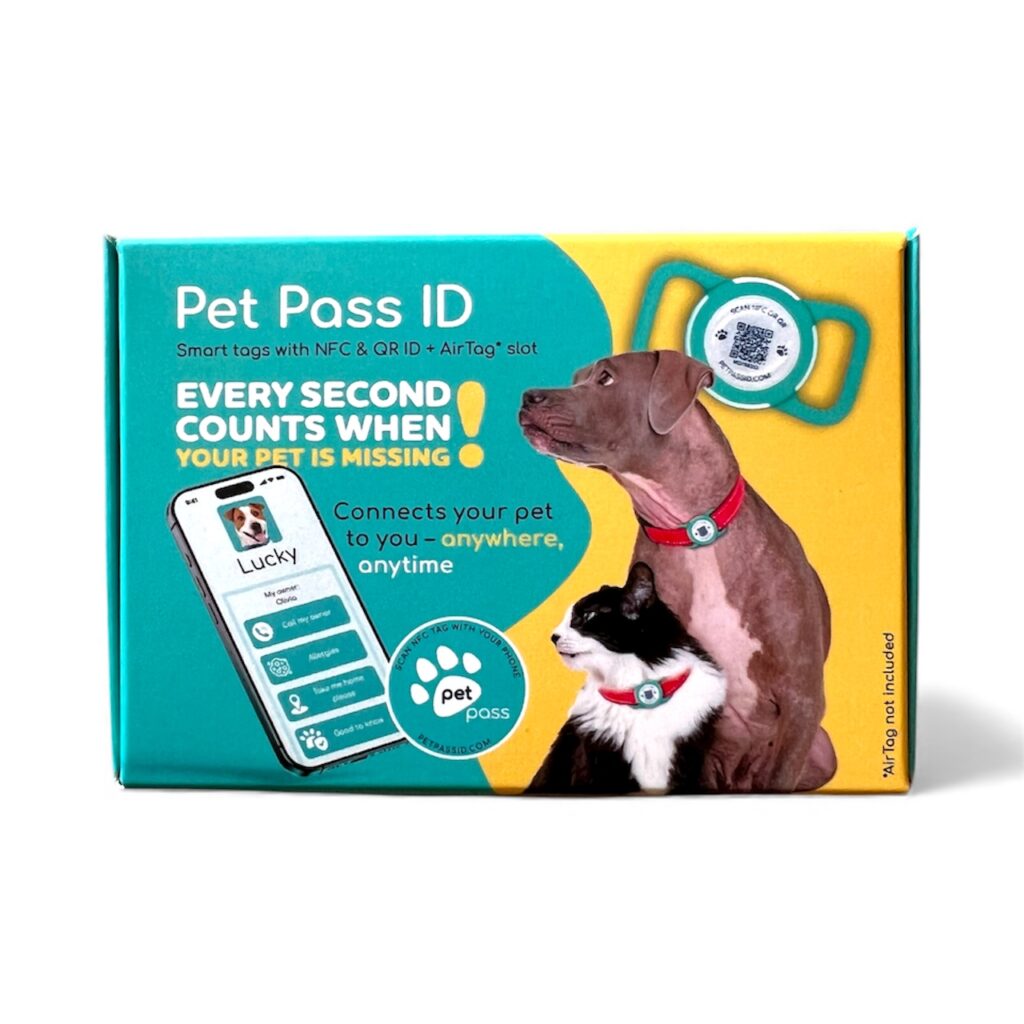
Pet Pass ID - Smart Tag with AirTag Slot
€ 30.00 -
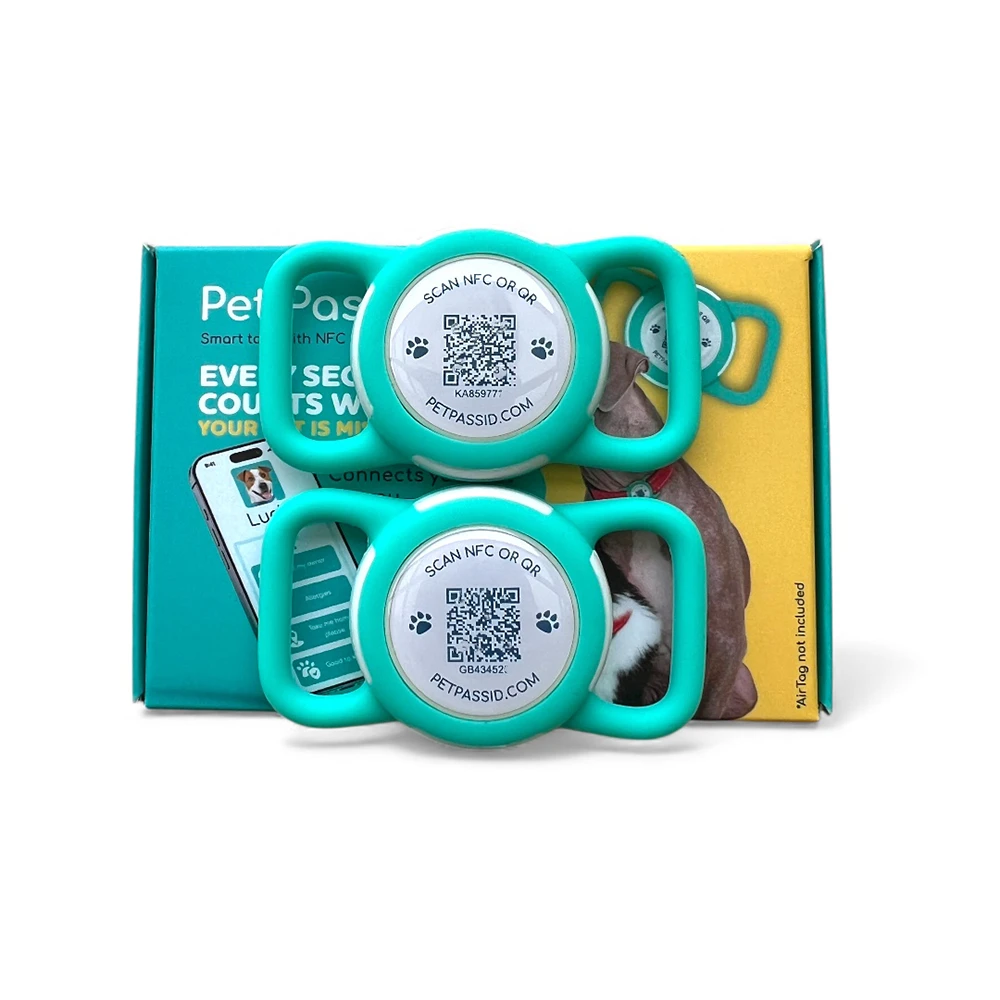
Pet Pass ID - Smart Tag with AirTag Slot 2in1 FRIENDS PACK
Original price was: € 60.00.€ 40.00Current price is: € 40.00.

What If the Dog Keeps Running Away?
If a lost dog runs whenever you step closer, stop chasing them. Pursuing a scared dog pushes them further into panic, often driving them straight into busy traffic or deep woods.
If you cannot safely catch the dog:
- Pull out your phone and take a clear photo or video.
- Note the exact location (street cross sections, GPS coordinates, or landmarks).
- Note the time and the direction of travel the dog was heading when you lost sight of them.
- Immediately contact local animal control, non-emergency police, or local lost-pet rescue groups with these details. As the AKC notes, accurate sighting reports with photos are often the single most critical factor in helping owners track down a fleeing dog.
Step 2: If You Can Secure the Dog, Check for Visible Identification First
Once you have safely contained the dog in a fenced yard, a quiet garage, a hallway, or on a spare leash, your immediate question becomes: Can this dog tell me who to call?
Start by inspecting their collar, harness, or tags carefully.
COLLAR & IDENTIFICATION CHECK
Physical ID Tags | Digital Smart Tags | Microchip Scan |
Phone numbers, street address, or dog name. | QR code or NFC chip scanned with smartphone. | Requires vet or shelter scanner device. |
1. Check for Engraved ID Tags or Stamped Collars
Look closely at metal or plastic tags dangling from the collar. Look for phone numbers embroidered directly onto the collar strap or written in permanent marker on the underside.
2. If There is a Phone Number, Call Immediately
This is the fastest, simplest path home. If the owner doesn't answer right away:
- Send a clear text message ("Hi, I think I just found your dog near [Location]. Please call me back!").
- Leave a short, calm voicemail.
- Wait 5–10 minutes near the area before moving the dog further away.
3. Check for a Digital QR Code Tag
Many modern pet tags carry a scannable QR code on the back. Open your smartphone camera, point it at the code, and click the link that pops up. This will usually open a web browser profile containing emergency contacts, medical history, and the owner's phone number.

Now imagine someone found your pet. How easy would you make it for them to help?
Free 60-second safety check.
Pet Safety Check
✓ Takes about 60 seconds
✓ Personalized to your pet
✓ Get your Pet Safety Score
Free. No purchase required.
4. Check for an NFC Smart Tag (Tap with Your Phone)
Some advanced pet tags use Near Field Communication (NFC)—the same technology used for contactless phone payments.
If you see a tag marked with an NFC symbol, simply unlock your iPhone or Android phone and tap the back of your phone directly against the tag. Within seconds, a notification banner will appear linking you straight to the pet's live digital profile.
How Pet Pass ID Works in Real Life:
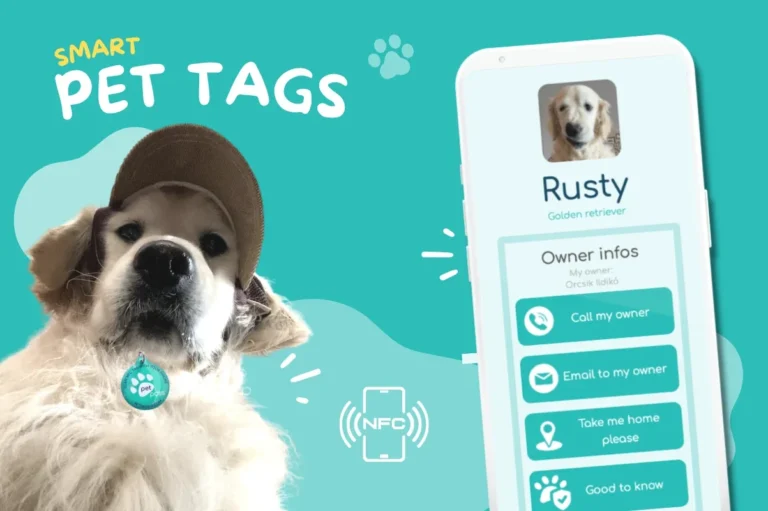
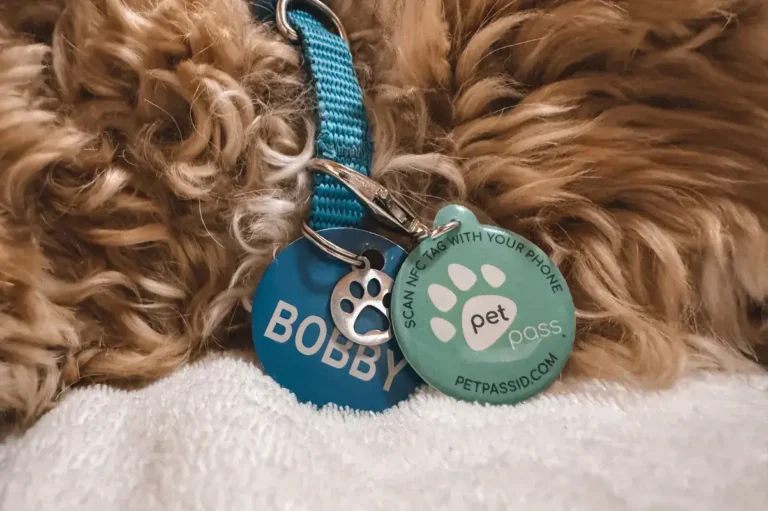
Products like Pet Pass ID combine both QR and NFC technology into a single durable collar tag. If you find a dog wearing a Pet Pass ID, you don't need a vet scanner, a special mobile app, or a database login. You simply tap your phone or scan the tag to view the owner's direct phone numbers, secondary emergency contacts, vet info, and critical health alerts—allowing you to connect with the owner in seconds right on the sidewalk.
Step 3: No Tag? The Dog May Still Have an Internal Microchip
If the dog is not wearing a collar, or if the collar has no readable numbers or tags, don't panic. The dog may still carry an implanted microchip.
Can You Tell If a Dog Is Microchipped Just by Looking or Feeling?
No. A pet microchip is a tiny glass capsule about the size of a single grain of rice implanted under the skin between the shoulder blades. You cannot see it from the outside, and feeling around for it by hand is rarely successful because chips can migrate beneath muscle and tissue.
Can I Scan a Dog's Microchip Using a Smartphone App?
No. This is one of the most common myths online. Smartphone NFC readers use different radio frequencies than standard veterinary pet microchips. A mobile phone cannot read or scan a standard pet microchip. You will need a dedicated microchip scanner.
ICROCHIP VS. SMART TAG COMPARISON
| FEATURE | PET MICROCHIP | PET PASS SMART TAG |
| Location | Under the skin | On the collar |
| How it's read | Specialized scanner | Any smartphone |
| Who can read it | Vets, shelters, police | Anyone on the street |
| Needs battery? | No | No |
| Requires subscription? | Sometimes for updates | No |
Where Can You Get a Found Dog Scanned for Free?
If you have secured a dog with no visible ID, you can take them to several local facilities to be scanned:
- Veterinary Clinics: Almost every private vet clinic has a universal microchip scanner and will gladly scan a stray or found dog for free. Call ahead to let them know you are bringing in a found pet.
- Animal Shelters & Rescue Groups: Municipal animal shelters, humane societies, and local dog rescues carry multi-frequency scanners.
- 24/7 Emergency Pet Hospitals: If you find a dog late at night or over the weekend, emergency veterinary facilities are open and equipped with scanners.
What If the Microchip Data Is Outdated or Unregistered?
Sometimes a scan successfully detects a microchip number, but the database search hits a wall:
- The phone number on file is disconnected.
- The owner moved and forgot to update their address.
- The chip was registered to a breeder or shelter years ago and never transferred.
This is a real frustration in animal rescue work. As the ASPCA emphasizes, a microchip is only as effective as the registry data attached to it. If the microchip info is outdated, the shelter or vet will log the chip number while you move on to local community searching and online reporting.

Step 4: Should You Take a Found Dog Home?
What happens if it's 11:00 PM, animal control is closed, local shelters are at capacity, or you are waiting for a vet clinic to open in the morning? Can you bring the found dog into your house overnight?
Yes—provided you can do so safely and responsibly. However, caring for an unfamiliar dog requires extra precautions.
TEMPORARY HOME CARE: DOs AND DON'Ts
| DO: | DON'T: |
| • Keep strictly isolated from pets • Provide fresh water & calm room • Secure all exterior exit doors • Double-check fence perimeters | • Let them mix with your pets • Give human medications • Bathe immediately unless messy • Leave unsupervised in yard |
1. Keep the Found Dog Completely Separated from Your Own Pets
Even if your resident dog is friendly and social, do not let them interact.
The AKC strongly advises keeping found animals entirely isolated from resident household pets. You do not know the found dog's vaccination history, health status, flea/tick situation, or behavioral triggers around other animals. The sheer stress of being lost can cause an otherwise friendly dog to react defensively toward your pets.
- Place the found dog in a quiet guest room, utility room, secure garage, or crate.
- Keep doors closed and install sturdy baby gates.
2. Create a Quiet, Low-Stress Space
- Water & Food: Provide a clean bowl of fresh water. Offer a small portion of plain, bland food (such as plain white rice with boiled chicken, or standard kibble if you have it). Avoid rich foods, seasoned meats, or table scraps that could trigger upset stomachs.
- Bedding: Place clean blankets, towels, or a pet bed in the room.
- No Unnecessary Treatments: Do not attempt to give the dog human medications, flea treatments, or prescription medicines without direct veterinary clearance. Avoid giving them a full bath immediately unless they are covered in mud or hazardous chemicals, as bathing an already terrified animal adds immense stress.
Step 5: Post the Dog Online—But Hold Back Key Details
Social media and local community boards are incredibly powerful tools for reuniting missing pets with their families. A single viral post can reach an owner within hours.
However, you must post smartly to protect the dog from fraudulent claims.
What Your Online Found-Pet Post SHOULD Include:
- Clear Photo: A good picture of the dog's face and body.
- General Location: The neighborhood, park, cross streets, or town where the dog was found ("Found near 5th Avenue and Oak Street").
- Date and Time: Exactly when you picked up the dog.
- Basic Description: Size, general breed mix, coat color, and whether they were wearing a collar.
- Contact Instructions: How people should reach you (e.g., via private message or text).
What Details You Should WITHHOLD (To Verify Real Owners)
Unfortunately, when popular, purebred, or valuable dogs go missing, dishonest individuals may occasionally try to claim a dog that isn't theirs.
To make sure you hand the pet back to their genuine family, keep 1 or 2 specific features unmentioned in your public post:
- Do not mention: The dog's sex or spay/neuter status (if not obvious in photos).
- Do not mention: Unique spots, birthmarks, or specific tail/ear characteristics.
- Do not mention: The exact pattern, color, or brand of their collar/harness.
- Do not mention: Any microchip registration details or specific medical conditions.
ANATOMY OF A SAFE FOUND-PET POST
[ CLEAR PHOTO OF DOG ]
FOUND DOG - Oakwood Neighborhood (Main St & 4th Ave)
Found on Tuesday, Sept 22 around 4:30 PM.
Medium-sized mixed breed, dark brown coat, wearing a black collar.
Safe and resting comfortably indoors.
If you believe this is your dog, please message me with proof of ownership (photos, collar description, or medical records).
Step 6: Someone Claims "That's My Dog!" How Do You Verify Them?
Within hours of posting, you might get a message or phone call from someone claiming to be the owner. Before arranging a meetup, respectfully ask for verification. A loving pet owner will completely understand and appreciate your caution.
Evidence You Can Request:
- Recent Personal Photos: Ask them to message or text you 2–3 photos of the dog from their phone camera roll showing different angles or showing the dog with family members.
- Specific Identifying Questions: Ask them:
- "What color and pattern is the collar they were wearing?"
- "Does your dog have any unique spots, markings, or scars?"
- "Is the dog male or female?"
- "What name do they answer to?"
- Official Documentation: Veterinary bills, vaccination cards, adoption papers, or municipal pet licenses.
Caution on Behavioral Reactions: Do not rely solely on whether the dog acts excited when seeing the person. Extremely friendly dogs may react with wild excitement toward any stranger, while terrified or traumatized dogs might cower or act aloof even when seeing their true owner. Combine behavioral reactions with physical proof (photos, records, microchip match).
What If Ownership Is Disputed?
If two different people claim the same dog, or if your instincts tell you that someone is attempting to claim a pet fraudulently, do not hand the dog over. Contact your local animal shelter, police department, or animal control officer and let official authorities verify ownership documentation.

Step 7: What If Nobody Claims the Dog?
What if days pass, your posts go unanswered, and the microchip database leads nowhere?
It is easy to fall in love with a found pet after caring for them for a few days, leading many finders to think: "If no one claimed them in 48 hours, they must have been abandoned. Can I just keep them?"
1. Never Assume "No Immediate Response = Abandoned"
There are dozens of valid reasons an owner hasn't responded right away:
- They are elderly or do not use social media or local Facebook groups.
- They were away on vacation while a sitter was caring for the pet.
- The dog ran miles away, and the owner is searching in a completely different city or county.
- The owner is currently hospitalized or dealing with a personal emergency.
2. Follow Local "Stray-Hold" Laws
In almost all jurisdictions, a found dog is legally classified as property, and finder-keepers rules do not legally apply immediately. Most areas mandate a legal stray-hold period (typically anywhere from 3 to 10 days, depending on local municipal laws).
During this stray-hold period:
- You must officially report the found animal to the municipal shelter or animal control agency.
- The shelter logs the animal in their official registry so the searching owner has a central place to look.
- If you wish to foster or eventually adopt the dog if no owner appears, inform the shelter immediately. Many municipal shelters will allow you to hold the dog in your home as an official foster until the legal stray-hold period expires, at which point you can formally apply for adoption.
The Reverse Perspective: What Would a Stranger Find on Your Dog's Collar?
After walking through these steps as a finder, take a moment to look at the situation from the other side.
Imagine your dog slips past a back gate tonight, bolts after a deer on a weekend hike, or panics during an unexpected thunderstorm. A kind stranger finds them wandering on a busy road.
What tools are you giving that stranger to get your dog back to you quickly?
HOW A FINDER RECONNECTS WITH YOU
- NO COLLAR / NO TAGS
- Finder must transport dog to vet/shelter during business hours for chip scanning.
- OLD METAL TAG
- Call phone number (IF legible and up to date).
- PET PASS ID SMART TAG
- Tap or scan with ANY phone on the spot
- Instant profile & contact info!
If your pet is relying solely on a microchip, that finder has to secure your dog, find an open vet clinic or shelter, carry them into a facility, and wait for staff to scan the chip.
If your pet is wearing a standard engraved tag, the phone number might be scratched off, faded, or out of date.
Making a Stranger's Job Effortless
A finder shouldn't have to become a private detective to get your pet home. The faster, simpler, and clearer you make your pet's identification, the faster your pet returns to your living room.
This is precisely why modern pet safety combines three distinct layers:
- The Microchip: Your permanent, unalterable back-up proof of legal ownership under the skin.
- Traditional Contact Details: A clear phone number attached to the collar.
- Smart Digital Pet ID (Pet Pass ID): A scannable QR code and tap-to-scan NFC chip linking directly to a customizable online pet profile.
THE PET PASS ID DIFFERENCE
A microchip helps identify your pet AFTER someone carries them to a specialized scanner at a vet or shelter.
Pet Pass ID is built for the moment BEFORE that—when an ordinary stranger is standing on the street next to your lost pet wondering: "Who do I call right now?"
With a digital pet profile updated in real time, you can instantly change your phone numbers, list temporary vacation contacts, note critical medical needs (like diabetes or seizure meds), and share dietary warnings—giving any good Samaritan everything they need to reunite you with your pet in minutes.
Summary Checklist: Found a Lost Dog?
Keep or bookmark this simple checklist for quick reference whenever you encounter a missing pet:
FOUND A DOG? 7-STEP ACTION CHECKLIST
[ ] 1. SAFETY FIRST
Check body language. Don't chase or corner a terrified dog.
[ ] 2. SECURE THE DOG
Move to a fenced yard, hallway, or quiet room away from traffic.
[ ] 3. CHECK VISIBLE ID
Look for phone numbers, engraved tags, QR codes, or NFC smart tags.
[ ] 4. SCAN FOR A MICROCHIP
Visit a local vet, shelter, or 24/7 emergency hospital for a scan.
[ ] 5. SEPARATE FROM HOUSEHOLD PETS
Keep the found dog isolated in a calm room with fresh water.
[ ] 6. REPORT & POST LOCALLY
Notify local shelters; post on social media while withholding 1-2 unique physical details for owner verification.
[ ] 7. VERIFY & REUNITE
Request photos or vet records from anyone claiming ownership before handing the dog over.

Frequently Asked Questions (FAQ)
What should I do first if I find a lost dog?
First, ensure the environment and dog are safe to approach. Assess the dog's body language for signs of fear, pain, or aggression. Never chase a dog into traffic. Once secured safely, check their collar for visible phone numbers, engraved ID tags, or smart QR/NFC tags.
Is it safe to approach a stray or lost dog?
Only if the dog exhibits relaxed, curious, or non-defensive body language. Approach slowly from the side, keep your voice gentle, avoid direct eye contact, and let the dog initiate physical contact. If the dog growls, freezes, or bares teeth, stay back and call local animal control.
What should I do if a lost dog won't let me get close?
Do not chase them. Take a clear photograph or video with your phone, note the precise location, time, and direction the dog was heading, and report these details immediately to local animal control officers and community lost-pet networks.
Can I read a pet microchip with my smartphone camera or an app?
No. Standard pet microchips operate on specific radio frequencies that cannot be picked up by smartphone NFC sensors or camera lenses. You must take the animal to a vet clinic, animal shelter, or emergency hospital equipped with a dedicated microchip scanner.
Will a vet clinic charge me to scan a found dog for a microchip?
No. Veterinary clinics, emergency pet hospitals, and animal shelters will scan a found pet for a microchip free of charge.
Should I let a found dog play with my own dogs?
No. Keep found animals strictly isolated from your resident pets. You do not know the lost pet's vaccination history, health background, parasite status, or behavioral tendencies around other animals.
How do I prove someone claiming the dog is the real owner?
Ask them to provide 2–3 unposted photos of the dog from their phone, describe specific unmentioned physical characteristics (such as spots, collar colors, or ear shapes), or present veterinary and adoption records matching the animal.
Can I keep a lost dog if nobody claims them after 24 hours?
No. Legally, pets are considered property, and finder-keepers policies do not apply immediately. You must report the found animal to municipal shelters and follow your local jurisdiction's required stray-hold period (typically 3 to 10 days) before considering adoption.
What is the difference between a microchip and an NFC/QR smart tag?
A microchip is an internal transponder under the skin that requires a specialized reader at a vet or shelter. An NFC/QR smart tag (like Pet Pass ID) is worn externally on the collar, allowing anyone with a smartphone to tap or scan the tag and instantly access the owner's emergency contact details on the spot.
Keep your contact details close.
Discover smart NFC and QR pet tags that connect a finder to your pet’s digital profile.
Explore Pet Pass ID tags